Annabel Lovegrove
Product market fit isn’t luck. It’s a method.
Most founders think product market fit just happens if you’re lucky or push hard enough. That’s not true. There’s a methodology to get there. That’s what I do.
Book a free call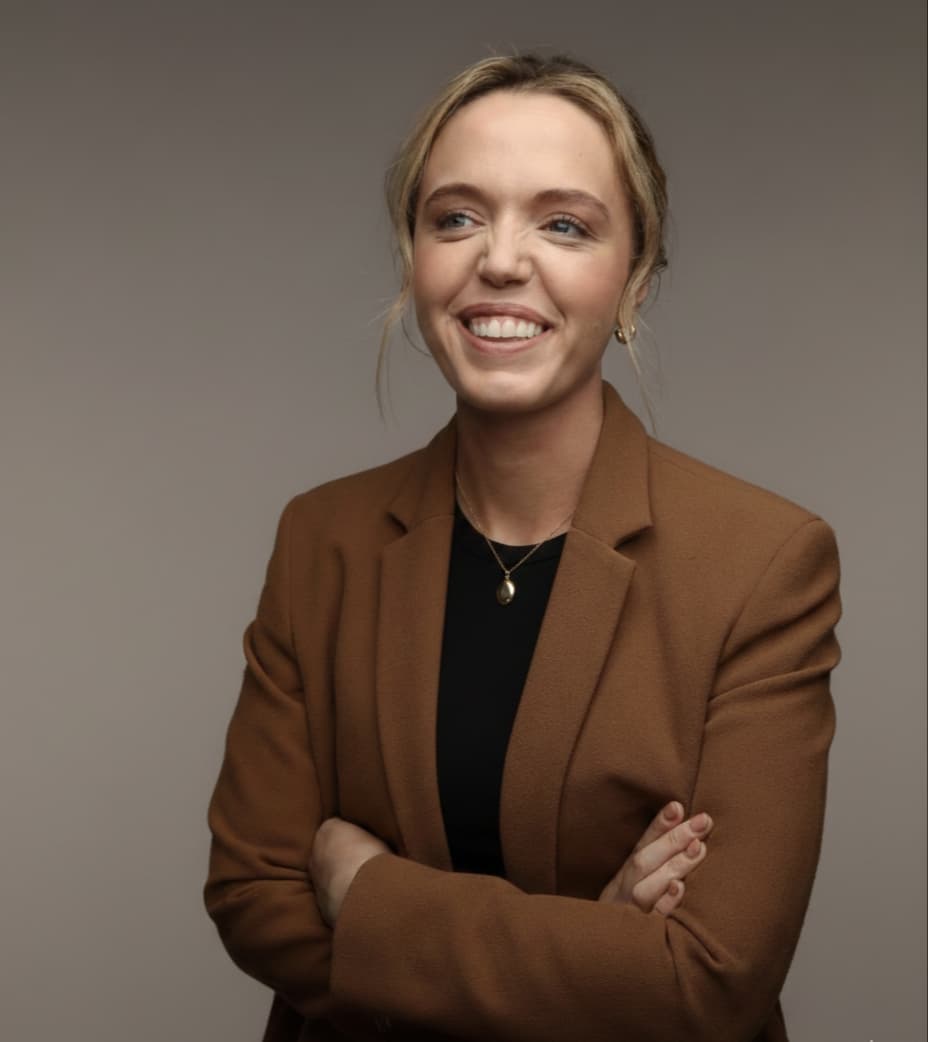
About me
I’m Annabel Lovegrove. I run every project myself, from the first call to the final recommendation.
I trained in psychology and data science. I led product strategy at Ziyx, a funded AI startup, and my work helped them raise over £1 million. Before that, I worked alongside the CEO at Moteefe through a fast growth phase.
I started Pattern & Proof because I kept seeing founders make big, costly calls on gut feel. Most of them knew it was risky. They just had no quick way to check.
Where I’ve worked
Ziyx
Led product strategy at a funded AI startup. Grouped over 5,000 users by behaviour and built the investor materials behind a £1M+ raise.
Moteefe
Worked alongside the CEO through fast growth. Board reports, pitch decks and customer feedback.
ANS Research Foundation
Worked on a research programme and turned lab findings into something policymakers could use.
I trained in psychology (first-class degree, Open University) and data science (LSE).
What product market fit means
Product market fit is when the right people want what you’ve built. They buy it, they stay, and they tell others.
When you have it, growth feels easier. Sales close faster. Customers come back.
When you don’t, everything feels like hard work. Every sale is a push. You keep adding features and hoping one of them works.
Why it feels like luck
Most founders get to their first customers on gut feel. That’s normal, and it works for a while.
Then the calls get bigger. What to build next. Who to sell to. What to charge. Each wrong call costs months and money.
Most founders try to fix this by talking to more customers. The trouble is, people aren’t good at explaining their own choices. They’ll tell you what they want, why they picked you and what they’d pay. Often they’re wrong on all three.
So the more you ask, the more sure you feel. You can still be wrong.
Where the science comes in
Science means testing an idea before you bet on it.
You start with a guess. Then you check it against what really happens.
I do the same with your customers. I check what they say against what they do. I look at who stays, who leaves and why. Then I test your ideas with enough people to trust the answer.
It’s the same process every time. It works whether you sell to businesses or consumers.
Signs you don’t have it yet
You might be close to product market fit, but not there yet, if:
- Investors ask for proof you don’t have.
- Your roadmap has three good options and you can’t pick one.
- Customers love the product once they’re in, but getting them in is hard.
- You’ve tried sales training, new features or a new website, and nothing has changed.
How I find it
Every project follows five steps.
- 1I pin down the decision you need to make.
- 2I look at what you already know, and what’s still a guess.
- 3I find the customers who behave differently from the rest.
- 4I test with lots of people, so the numbers hold up.
- 5I tell you what I’d do, and what would make you change course.
What it looks like in practice
- ZIYX3×
ZIYX were building an expensive 3D world inside their app. I tested it with 1,200 people from their target group. Users spent three times longer in a simpler version. They dropped the 3D build and focused on the core product.
- Moteefe2,860
Moteefe had a lot of bad reviews and didn’t know why. I sorted 2,860 reviews and support emails. Most of the complaints came back to just two suppliers. They switched, and the reviews got better.
- Nordic Life+12%
Nordic Life had loyal customers who had stopped buying. I found where people were losing interest in their emails. Three weeks later, click-through was up 12%.
Stop guessing. Start testing.
Tell me the decision you’re stuck on. The first call is free, and you’ll leave with a clearer view either way.
Pattern & Proof is based in London.